Last updated: October 16, 2025, 12:58 am
Introduction
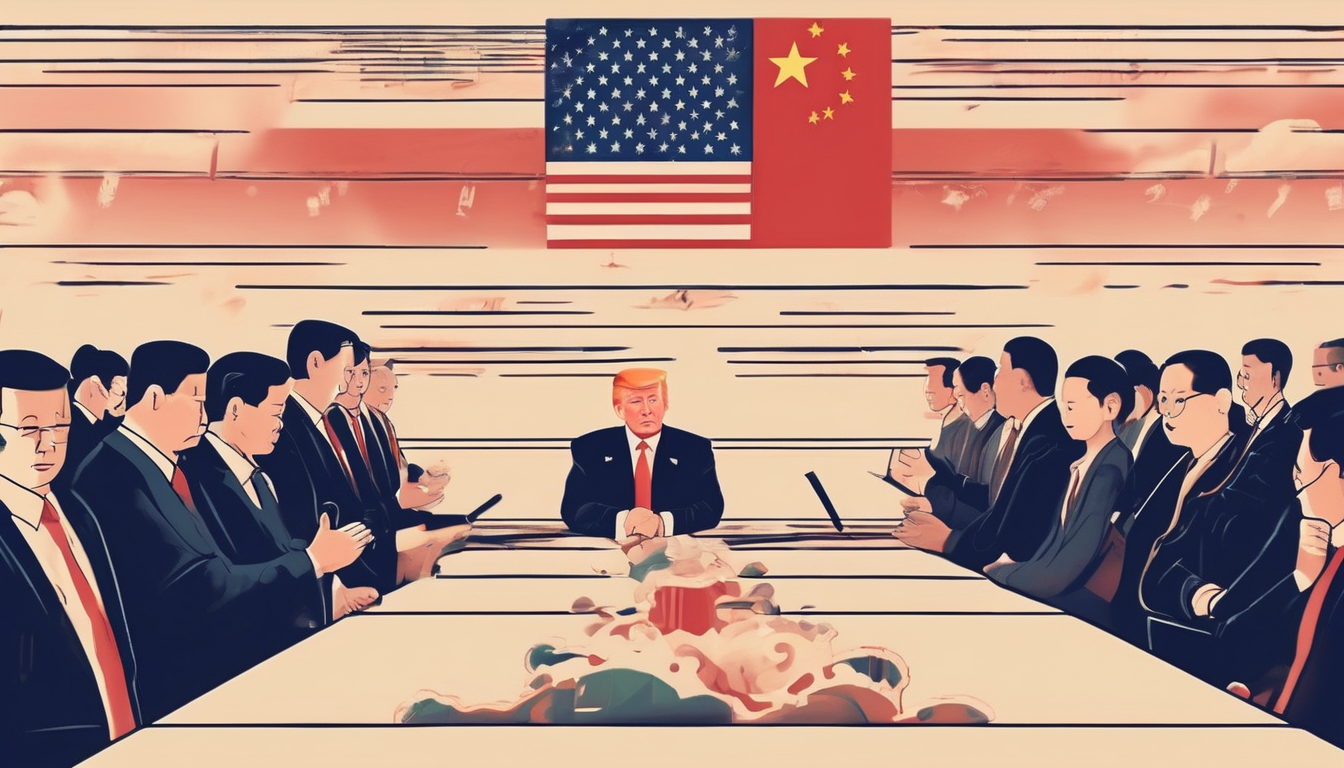
In a recent press conference, U.S. President Donald Trump made a significant statement regarding the ongoing economic tensions between the United States and China. When asked if the U.S. was preparing for a trade war, Trump asserted, “Well, we’re in one now.” This declaration underscores the escalating trade disputes that have characterized U.S.-China relations in recent years.
The implications of this trade war extend beyond bilateral relations, affecting global markets, supply chains, and economic policies worldwide. Understanding the current state of this trade conflict is crucial for businesses and investors alike.
Background & Context
The trade relationship between the U.S. and China has been fraught with challenges for over a decade. Initial tensions arose from issues such as intellectual property theft, trade imbalances, and tariffs. In 2018, the U.S. imposed tariffs on Chinese goods, prompting retaliatory measures from China. This cycle of tariffs and counter-tariffs has led to an ongoing trade war that has impacted various sectors, including technology, agriculture, and manufacturing.
As both nations continue to navigate this complex landscape, the stakes have only grown higher. The COVID-19 pandemic further complicated these dynamics, leading to increased scrutiny of supply chains and economic dependencies. Trump’s recent acknowledgment of the trade war signals a continued commitment to a confrontational approach towards China.
What’s New
- Trump officially recognizes the U.S. is in a trade war with China.
- New tariffs may be on the horizon as negotiations stall.
- Impact on global supply chains and manufacturing sectors.
Trump’s declaration that the U.S. is currently engaged in a trade war with China emphasizes the seriousness of the situation. As negotiations between the two economic powerhouses stall, there is speculation about the introduction of new tariffs that could exacerbate the existing tensions. The potential for further tariffs raises concerns for industries reliant on trade with China.
The ongoing trade war has already disrupted global supply chains, with many companies reevaluating their sourcing strategies. Firms are increasingly looking to diversify their supply chains to mitigate risks associated with tariffs and trade barriers. This shift could lead to long-term changes in global manufacturing and trade patterns.
Market/Technical Impact
The acknowledgment of an active trade war has immediate implications for financial markets. Investors often react to geopolitical tensions, and the trade war is no exception. Stock prices in sectors heavily reliant on trade with China, such as technology and agriculture, have shown volatility in response to Trump’s statements.
Moreover, the uncertainty surrounding tariffs and trade policies can lead to increased market speculation. Companies may experience fluctuations in stock prices as investors assess the potential impact of tariffs on profit margins and growth prospects. Additionally, currency markets may react to shifts in trade policies, affecting exchange rates and international investments.
Expert & Community View
Experts in international trade and economics have weighed in on Trump’s recent comments. Many believe that the acknowledgment of a trade war reflects a broader strategic shift in U.S. policy towards China. Analysts argue that this confrontational stance could lead to prolonged economic uncertainty, not only for the U.S. and China but also for global economies interconnected through trade.
Community sentiment varies, with some supporting Trump’s tough stance on China as a necessary measure to protect American jobs and industries. Others express concern that an ongoing trade war could lead to higher consumer prices and reduced economic growth. The debate continues as stakeholders seek clarity on the future of U.S.-China relations.
Risks & Limitations
While Trump’s acknowledgment of the trade war may resonate with certain political bases, it also carries significant risks. The potential for escalating tariffs could lead to retaliatory measures from China, further straining relations and exacerbating economic challenges. Businesses that depend on trade with China may face increased costs, which could ultimately be passed on to consumers.
Moreover, the uncertainty surrounding trade policies can hinder long-term planning for businesses. Companies may delay investments or expansions due to the unpredictable nature of tariffs and trade agreements. This caution could stifle economic growth and innovation in the U.S.
Implications & What to Watch
The implications of Trump’s acknowledgment of the trade war extend beyond immediate market reactions. Stakeholders should monitor key developments, including potential new tariffs, negotiations between U.S. and Chinese officials, and the impact on global supply chains. Additionally, the responses from major corporations and industries will provide insight into how businesses are adapting to the evolving trade landscape.
As the situation unfolds, it will be crucial to observe how both nations navigate these tensions. The potential for a resolution exists, but it will require significant diplomatic efforts and compromises from both sides. Stakeholders should remain vigilant in tracking developments that could influence trade policies and economic conditions.
Conclusion
President Trump’s recent acknowledgment of the ongoing trade war with China marks a pivotal moment in U.S.-China relations. As tensions continue to escalate, the implications for global markets, supply chains, and economic policies are profound. Stakeholders must remain informed and adaptable as they navigate this complex landscape, balancing risks and opportunities in an uncertain economic environment.
FAQs
Question 1
What are the main causes of the U.S.-China trade war?
The trade war stems from issues such as trade imbalances, intellectual property theft, and tariffs imposed by both countries in response to these concerns.
Question 2
How might the trade war affect consumers?
The trade war could lead to higher prices for goods due to increased tariffs, potentially impacting consumer purchasing power and overall economic growth.
This article is for informational purposes only and does not constitute financial advice. Always do your own research.